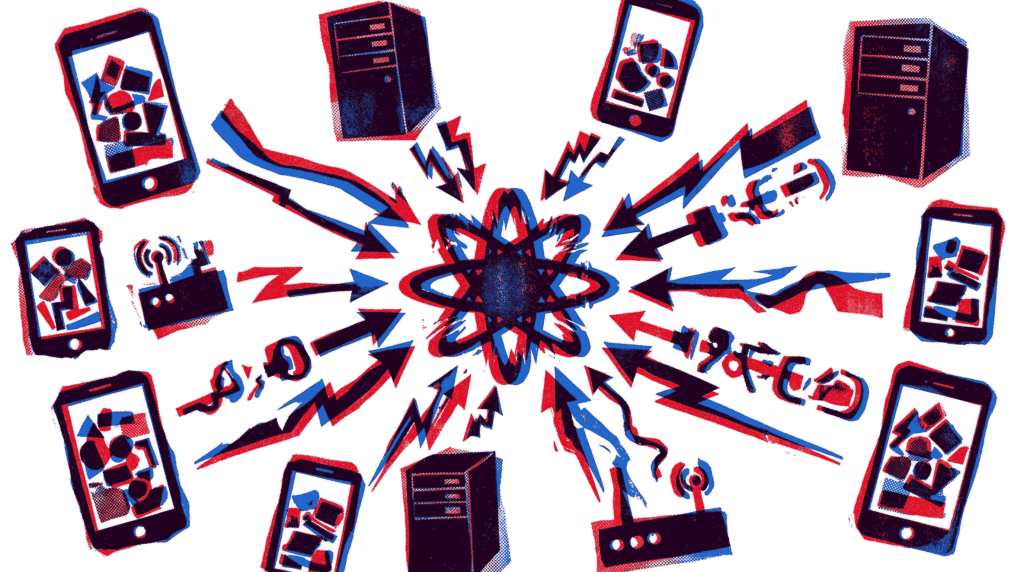
Old-school machine learning forces you to drag petabytes of private user data into a single, massive server vault. That breaks the law in half the world today. What if you just shipped the empty math model directly to the users instead? This flips the script entirely. Federated learning basically pushes the actual training process straight down to the phone in your pocket-forcing the algorithm to learn from your private text messages, bank transfers, and medical scans locally without ever letting a single raw byte slip back to the mothership. It locks the doors.
What Exactly Is Federated Learning?
The whole setup acts like a hive mind. Instead of hoarding hard drives, the master server hands a totally blank, untrained template out to a million different phones, heart monitors, and smart fridges. They do the homework. Every single device runs the math against its own private files locally, completely hidden from the internet. The phone just packages up the math adjustments-the actual weights-and shoots those back to the headquarters while the raw data never leaves the client device. The server mashes those million tiny updates together to build a smarter master copy before blasting it back out for round two.
This completely wrecks the old centralized server model. Look at multimodal learning for a second. Multimodal smashes text and audio together, but federated learning just glues together the finished math from a thousand walled-off databases.
How Federated Learning Works: A Step‑by‑Step Breakdown
You have to set up a loop. The main server and the user devices play ping-pong with the math files-running through four exact stages to get the job done.
1. Initialization and Model Distribution
The home server boots up a totally blank, useless model. It needs guinea pigs. The system hunts down a batch of phones that happen to be plugged into the wall, sitting totally idle on a fast Wi-Fi connection, and silently drops the blank template right into their local storage.
2. Local Training on Private Data
The device goes to work the second the download finishes. It runs the math against your personal texting history or your blood test records to bend the math in the right direction. Keep the secrets safe. After crunching the numbers for a few minutes, the phone just spits out a model update-a tiny math file explaining exactly how to tweak the master system based on what it just saw.
3. Secure Aggregation at the Server
The phones fire those tiny math files back to the cloud. You throw in secure aggregation-a heavy cryptography trick that completely blinds the server to who sent what-because reading an individual phone’s update can actually leak its private messages directly to the engineers. The system averages out the noise. It takes the massive pile of anonymous math, blends it together, and creates a slightly smarter version of the master template.
4. Iteration and Convergence
The server pushes the upgraded template back out to a fresh batch of phones. You run this exact same loop ten thousand times. The main file slowly absorbs the habits of a million different users without ever seeing a single real photograph or text message, stopping only when the math finally flatlines and stops learning anything new.
Key Benefits of Federated Learning
Federated learning outright kills the biggest headaches attached to hoarding data in a single room.
- Data Privacy: Your files stay on your hardware. You instantly dodge the massive, company-ending server breaches and completely bypass the nightmare of fighting GDPR and HIPAA compliance audits.
- Network Costs: Pushing a three-megabyte math file across a cellular network costs basically nothing compared to trying to upload four gigabytes of raw security camera footage.
- Live Feeds: Standard databases rot. This setup sucks in the absolute latest slang and behavior from millions of live phones instantly, keeping the engine totally relevant.
- Zero Latency: The brain lives on the phone. You stop waiting for a distant server to answer your requests because the local chip just does the math instantly.
Prominent Challenges and Limitations
Wiring this up is an absolute nightmare. The physical world hates your clean math.
- Weird Data (Non-IID): Everyone acts totally different. One guy writes legal briefs while a teenager just spams emojis-and that complete lack of uniformity totally stalls the math out.
- Garbage Hardware: You are dealing with four-year-old Androids and brand-new iPhones simultaneously. Half the phones will just die or drop their Wi-Fi connection right in the middle of a heavy training loop.
- Bandwidth Limits: Passing the math files around is cheap, but passing a two-gigabyte neural network update to ten million phones will still melt your cloud budget.
- Hacking the Math: The updates leak secrets. A smart hacker can run a gradient inversion attack to literally rebuild the private photos from the raw math files if you forget to inject a heavy dose of differential privacy noise into the traffic.
Real‑World Applications of Federated Learning
Stop treating this like a lab experiment. The biggest tech companies on the planet already run this code silently in the background of your phone right now.
- Keyboard Typing: Google Gboard actively reads how you type your texts to guess the next word without ever sending your private conversations to their servers.
- Hospital Scans: Rival hospitals pool their math to build massive tumor-hunting algorithms without ever violating patient privacy laws-NVIDIA FLARE pushes this exact setup.
- Smart Speakers: The microphones learn the specific weird acoustics of your living room locally instead of backing up your personal conversations to the cloud.
- Self-Driving Cars: Tesla and the rest pull the road logic from thousands of cars simultaneously without trying to upload fifty petabytes of dashcam video every night.
- Bank Fraud: Competitor banks secretly compare their fraud notes to catch the scammers without ever exposing their actual client lists to each other.
Variations of Federated Learning Architectures
You have to change the blueprint based on who actually holds the files.
- Horizontal (HFL): The standard play. Two regional banks have completely different users, but their spreadsheets use the exact same columns for deposits and withdrawals.
- Vertical (VFL): The puzzle pieces. A credit card company and a retail store both serve the exact same customer-one has the purchase history, the other has the bank balance-and they sync the math up without trading the actual data.
- Transfer (FTL): The weird cases. You use this when the spreadsheets share absolutely zero rows and zero columns, relying heavily on transfer learning tricks to bridge the gap.
The Relationship Between Federated Learning and Other AI Paradigms
This tech never works alone. You jam Chain‑of‑Thought prompting right into the local phone processor to force the script to figure out complex logic puzzles on the fly, relying completely on the background math it already downloaded from the hive mind. Wire it up. You hook the Tree‑of‑Thought framework into the system so the local bot can literally argue with itself to find the best answer without ever calling home to a server.
The Future Outlook for Federated Learning
Governments are actively trying to sue tech companies into the ground over privacy laws, making this specific math the only legal way out. The engineers are currently grinding away at squashing the update files down to nothing and fixing the math so it stops crashing when a user acts weird. Combine this with the 5G network rollouts and you suddenly have millions of cars and phones actively talking to each other with zero lag.
The global brain is dying. The new play drops the massive master copy onto your phone and then aggressively trains a tiny, totally isolated code layer specifically for you-giving you the raw power of the hive mind with a totally customized personality. Read up on multimodal learning if you want to see how these systems juggle video and text files simultaneously without breaking the privacy locks.
Conclusion
You stop bringing the files to the math and start bringing the math to the files. It flips the entire industry on its head by totally removing the need to hoard dangerous amounts of private user data in a vulnerable central server. Yes, fighting with dead phone batteries and weird data spikes is a total headache right now. But if you want to build mobile apps or medical software without the government knocking on your door, you absolutely have to bake federated learning into the bedrock of your code.
Further Reading: Explore more about AI reasoning with our articles on Chain‑of‑Thought Prompting, the Tree‑of‑Thought Framework, and Multimodal Learning. For foundational research, see Google’s original blog post on Federated Learning and the comprehensive survey paper by Kairouz et al.